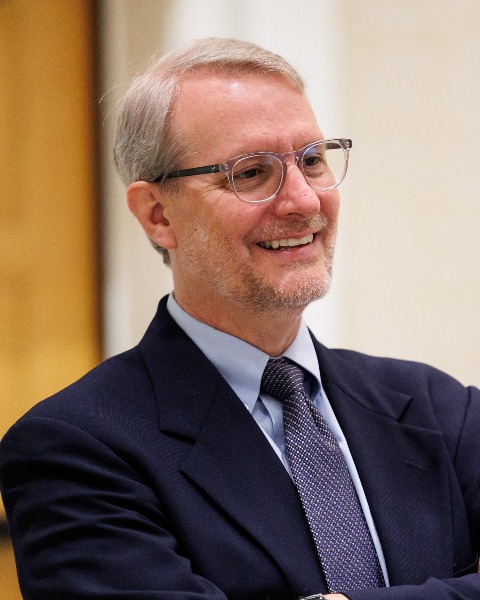
Chair and Professor University of Arkansas for Medical Sciences Little Rock, Arkansas
Abstract: Providing healthcare is a multi-disciplinary, interprofessional endeavor. Especially in hospitals, many well-trained individuals focus their efforts on patient illness and injury. Commonly, this array of professionals, trading on a sports analogy, is called the "healthcare team." It is easy to hear the term ‘team' thrown around quite often, from administration to bedside personnel, and yet, it is often difficult to find team-based activities occurring in the hospital. Professional duties get parsed, and little understanding of each professional's responsibilities as well as the overall goals of care for any particular patient exists among "team" members. So, while the ideal of a team may remain useful, the use of the “team” metaphor has become stale and too outmoded to be functional.
I wish to shift metaphors—decidedly to break out of the staleness of the “team” concept that interferes with good interprofessional care. The new metaphor is one of music-making—specifically, group-based music making (e.g., ensembles). Group music-making requires both musical catalyst and delimitations. The catalyst can be a theme or baseline, key or mode, and the delimitations are determined by a score. I offer four music-making models for Interprofessional healthcare (singular vision, directed ensemble, expressive variations, and “Orpheus Chamber Orchestra” [OCP])—recognizing the usefulness of one model (directed ensemble), and yet specifically championing another (OCP). This analogical analysis—with patient as “score” and professionals as “musicians”—can help critique group-based practices in hospitals through insights of aimed at coordinating and communicating among healthcare members for improved care for patients.
Keywords: interprofessional health care, communication, collaboration
Learning Objectives:
After participating in this conference, attendees should be able to:
identify practices that undermine good group communication in health care
apply new metaphorical models of group practice for interprofessional health care
analyze successful and challenging collaborations among professionals

.png)